Spring Exhibition at Kyoto Seishu Netsuke Art Museum

Greetings From Kyoto

Kyoto photographer Kosuke Okuda and I teamed up to do an article for the Russian travel magazine Afisha Mir (Афиша-Мир). I just got a PDF of the article — hot off the server!

In the article I introduced the long history of Aritsugu which was founded in 1560. Aritsugu is one of the most famous makers of traditional Japanese knives and they are found in good kitchens all over Japan. We focused on the special eel bone cutting ‘honegiri’ knife that is used for the traditional Kyoto summer delicacy of ‘hamo’ pike eel. The knife is over 40 cm long, weighs more that 500 gm and costs more than $1,000 USD!

I wrote it, but I can’t read it!!

Kyoto photographer Kosuke Okuda and I teamed up to do an article for the Russian travel magazine Afisha Mir (Афиша-Мир). I just got a PDF of the article — hot off the server!

In the article I introduced the long history of Aritsugu which was founded in 1560. Aritsugu is one of the most famous makers of traditional Japanese knives and they are found in good kitchens all over Japan. We focused on the special eel bone cutting ‘honegiri’ knife that is used for the traditional Kyoto summer delicacy of ‘hamo’ pike eel. The knife is over 40 cm long, weighs more that 500 gm and costs more than $1,000 USD!

I wrote it, but I can’t read it!!

Kyoto photographer Kosuke Okuda and I teamed up to do an article for the Russian travel magazine Afisha Mir (Афиша-Мир). I just got a PDF of the article — hot off the server!

In the article I introduced the long history of Aritsugu which was founded in 1560. Aritsugu is one of the most famous makers of traditional Japanese knives and they are found in good kitchens all over Japan. We focused on the special eel bone cutting ‘honegiri’ knife that is used for the traditional Kyoto summer delicacy of ‘hamo’ pike eel. The knife is over 40 cm long, weighs more that 500 gm and costs more than $1,000 USD!

I wrote it, but I can’t read it!!

Kyoto photographer Kosuke Okuda and I teamed up to do an article for the Russian travel magazine Afisha Mir (Афиша-Мир). I just got a PDF of the article — hot off the server!

In the article I introduced the long history of Aritsugu which was founded in 1560. Aritsugu is one of the most famous makers of traditional Japanese knives and they are found in good kitchens all over Japan. We focused on the special eel bone cutting ‘honegiri’ knife that is used for the traditional Kyoto summer delicacy of ‘hamo’ pike eel. The knife is over 40 cm long, weighs more that 500 gm and costs more than $1,000 USD!

I wrote it, but I can’t read it!!

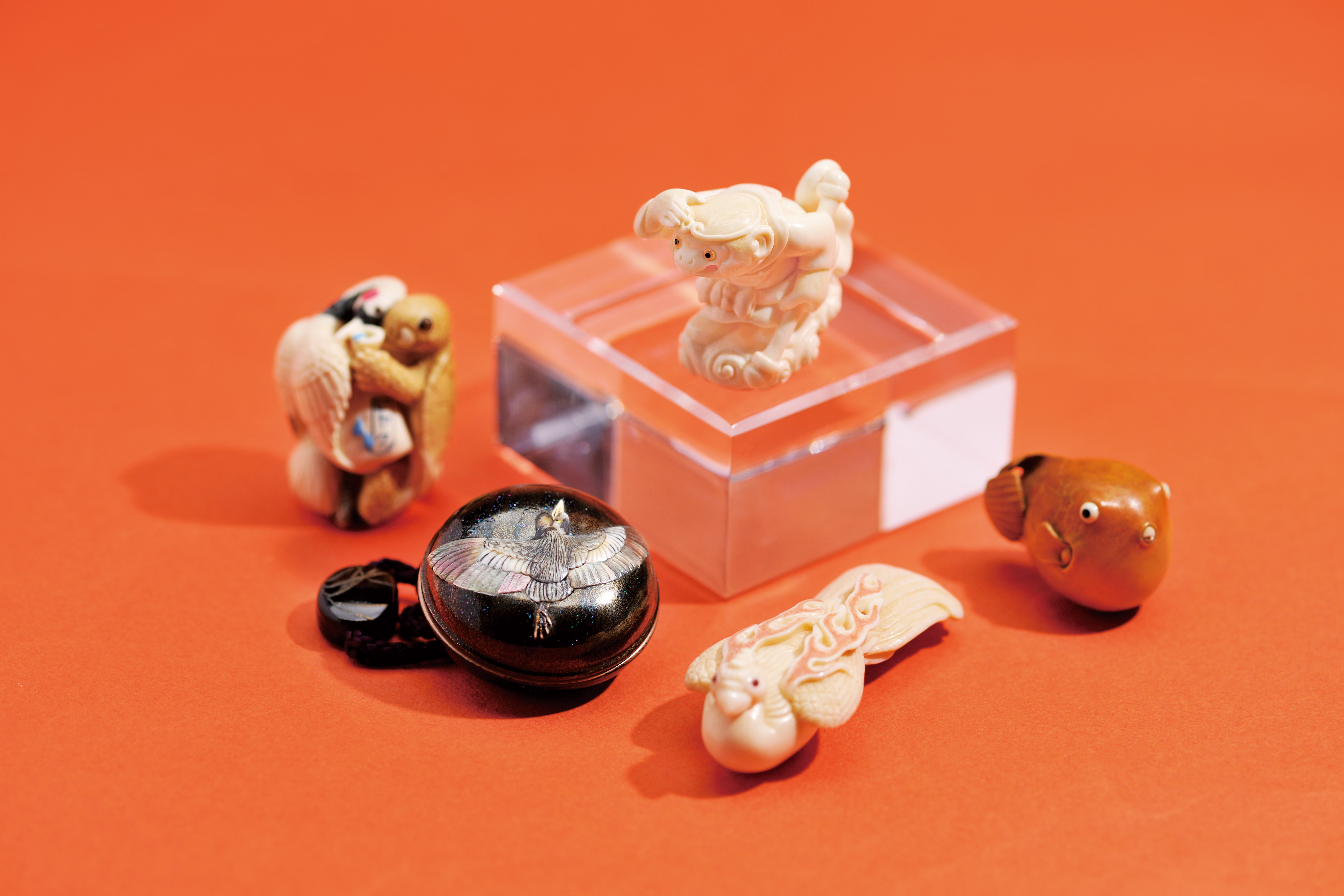
Mention netsuke to a Japanese and it will most likely draw a blank. An under-appreciated art form, netsuke originated in the 17th century, when they served as a toggles to fasten items such as pillboxes and tobacco containers to obi belts, since kimono are without pockets. Netsuke developed over time from being merely functional to highly-coveted fashion accessories, intricately-detailed and crafted from a variety of precious materials including ivory. Fewer people know that netsuke are still being made today by contemporary artisans, both in Japan and abroad.

I first visited Kyoto Seishu Netsukekan, located in the Mibu area not far from Nijo Castle, about 3 years ago, and was blown away by the beauty of the pieces and stately former samurai residence in which they were housed. It quickly became my favourite museum in the city and, in February 2012, I was given the opportunity to conduct a filmed interview with the charming and talented Kuwabara Jin, one of the artists the museum exhibits.  I was pleasantly surprised in March when I was asked to assist them with their overseas PR, and I’m really keen to share the joys of this place with visitors to Kyoto!

The Netsukekan is open to the public this month (until the end of April) for its Spring Exhibition, featuring a variety of pieces by contemporary artists on the theme of “The Next Stage.” The title is very much open to interpretation but suggests for instance the transition from one season to the next, or the arrival of a new opportunity. In an ode to this bountiful season, one piece, “Cluster of Flowers” by Hideyuki Sakurai, has the Chinese characters 飛躍, meaning “leap” or “progress,” minutely painted on the underside each flower, carved from ivory.  Another playful work by Ippu Wachi, “From Outer Space,”  portrays a curious creature that has ventured far from its home planet.

Why don’t you visit the Netsukekan on the way to the special Mibu Kyogen performance at Mibu Temple, just next door, from the 21st-29th April?

The Spring Exhibition on the Theme of “The Next Stage”

Opening times: April 1-30, 2013

10:00-17:00 (last admission 16:30)

Please note that the museum will be closed from 13:00 on April 12 (Fri)

Address: 46-1 Mibukayougosho-cho Nakagyo-ku Kyoto 604-8811 Japan
Click here for access information

There is no car parking available at the museum.

Entry: Adults: 1000 Junior high/high school students: 500 yen

Please note that children at elementary school age and below are not permitted to enter the museum.

No photography is allowed inside the museum.

The next exhibition by Toun Shishido will be held in the month of July.