


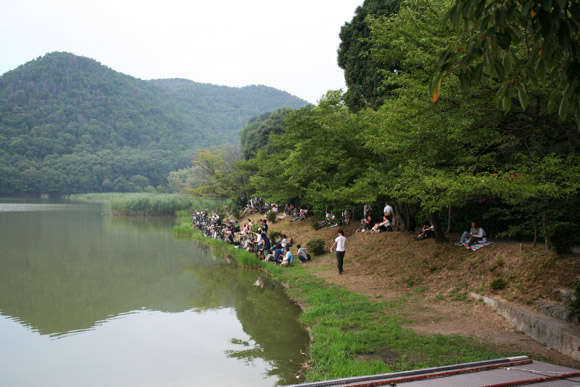
The Kyoto Daimonji viewing party at Hirosawa Pond is a rich cultural event combining tradition, community spirit, and natural beauty. Held annually in Kyoto, Japan, usually around the middle of August, this occasion marks the closing scene of O-bon, held in respect and remembrance of ancestral spirits who are supposed to return to worldly people during this period.
Gozan-no-Okuribi (五山送り火) literally means ‘five mountain’ 五山 ‘send off fire’ 送り火.
I was kindly invited to this viewing party by a friend, the 16 generation owner of a workshop that makes cast iron ‘kettles’ for the Japanese tea ceremony, Mr Seiwamon Onishi. He was the guest of honor as he had recently made a kettle for the hosts, a religious organization.
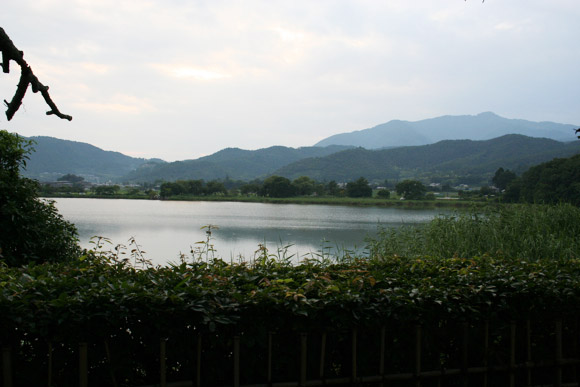
Kyoto’s Beautiful Landscape
During the festival, the Hirosawa-no-Ike Pond at the foot of Kyoto’s beautiful hills provides a fine setting. Tinted with green and with far-off Higashiyama mountains in view, the central point for the setting sun across the city is this pond.
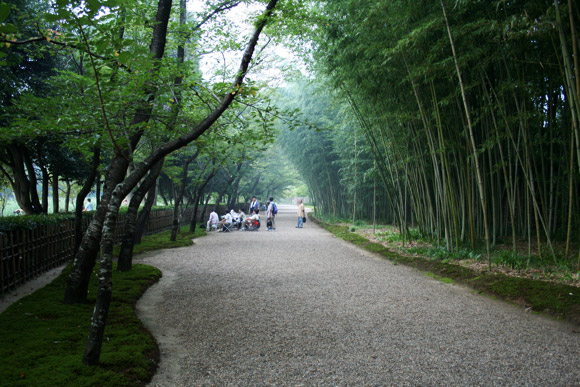
The Rich History of Japan
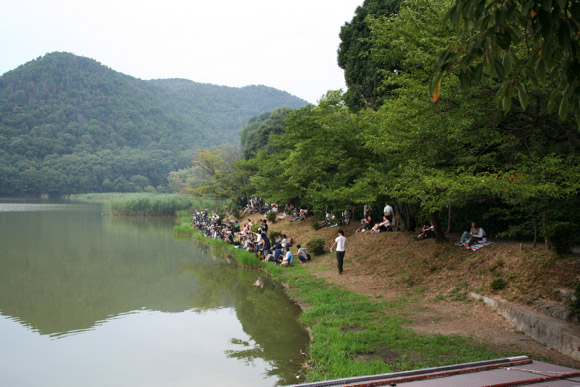
As dusk draws near, families—local and visiting alike—have arrived at Hirosawa Pond to behold the nature of festivities. The atmosphere is charged with a mix of excitement and the sacred as the Daimonji Okuribi, or the “Great Daimonji Bonfire,” is about to take place.
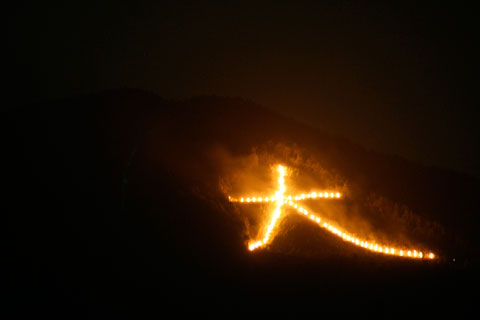
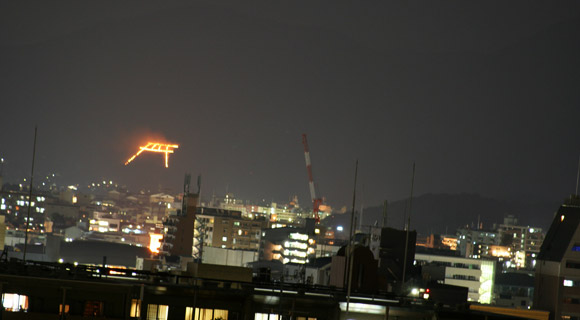
The Daimonji Okuribi is one of the largest bonfire events in the country. Huge bonfires are lit on five mountains surrounding Kyoto. These bonfires are laid out in the form of Japanese characters and symbols, all of which carry their own meaning. These characters indicate something related to Japanese culture or history, from the kanji “large” (大) to symbols showing the return of ancestors’ spirits to the afterworld.
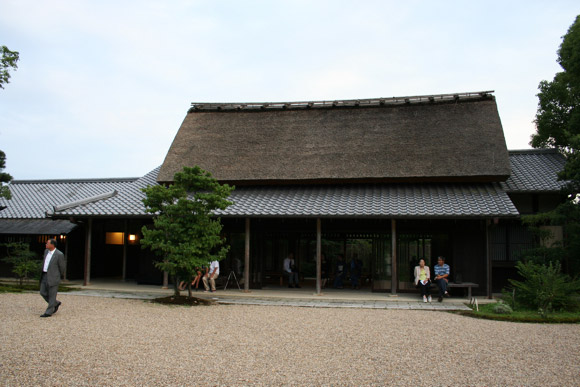
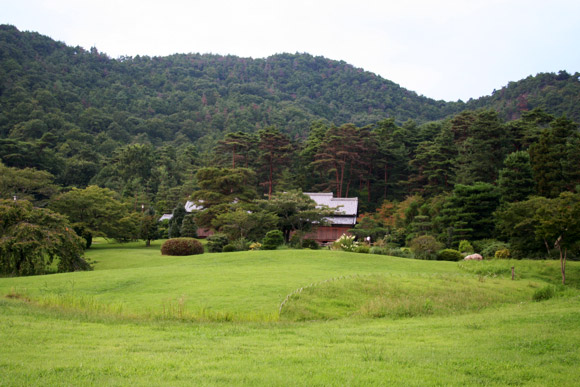
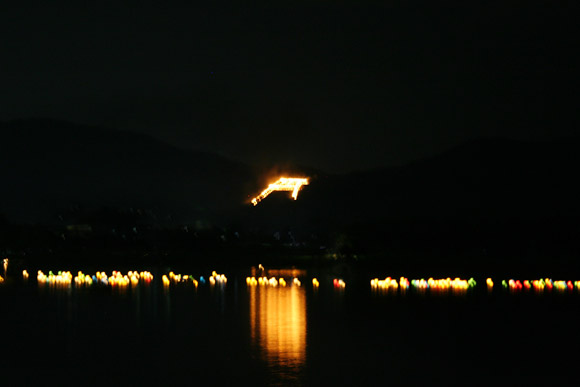
At Hirosawa Pond, the venue offers the best view for futilely watching the shaped bonfires of characters lit up one after the other. Indeed, these immense flames atop mountains that cast their light into the dark skies as they remotely wrote the final moments of O-bon to bid farewell to the spirits of the deceased returning to their spirit world leave one breathless and in awe.
The Sense of Unity
The atmosphere is always festive yet introspective. People bring picnic baskets with traditional Japanese snacks, such as dango and tea, to picnic on during the spectacle. There is a sense of harmony amongst the viewers, as people of all walks of life join to pay respect to tradition and celebrate their heritage.
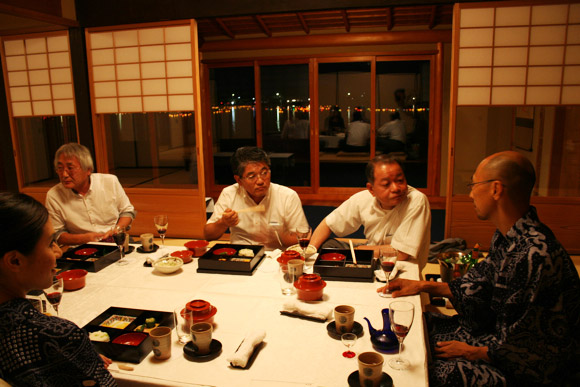
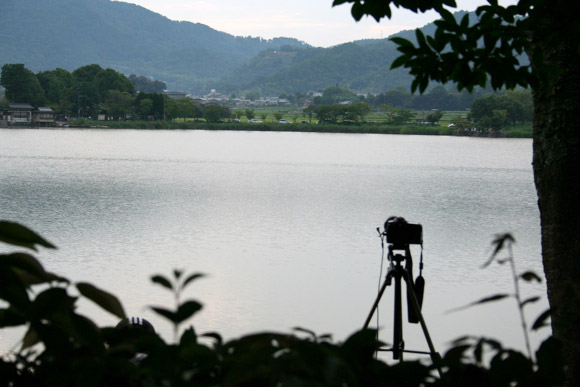
The photos of the fire and lanterns are quite blurry as I didn’t have a tripod. Sorry!
Preserving the Old Customs in the modern world!
Therefore, when the last bonfire dwindles down to embers and the night turns dark again, the impression rendered by the Kyoto Daimonji Viewing Party at Hirosawa Pond remains in the memory. It is a testament to the tradition-steeped within Kyoto and Japan as a whole, preserving old customs thriving in the modern world.

Seiwemon Onashi and Onishi Seiwemon Museum
Mr Onishi is the 16th generation owner of the workshop and foundry that is more than 400 years old. Mr Onishi is one of the 10 craftsmen that is necessary to make the necessary tools and implements for the Urasenke, Omotesenke, and Mushakoji-senke Schools of Tea.
The Onishi Seiwemon Museum is located in central Kyoto on Sanjo Street, just west of the Karasuma and Sanjo streets intersection. The museum is definitely worth a visit if you are interested in traditional arts and crafts or the tea ceremony.
*The museum is often closed during summer and winter months, please check their website before going.
Onishi Seiwemon Museum website (English language)
The tea ‘kettles’ are used to heat the water for the tea ceremony which is then poured into the tea bowl with a bamboo ladle. These kettles are called ‘kama’ in Japanese.


SHARE! Kyoto Support Topic: Sightseeing in Kyoto
Tweet: Find out what’s going on in Kyoto right now, follow me on Twitter.
Article Links and Reference
Daimonji Okuribi Senbei and Kompeito (This KyotoFoodie article has a good explanation of Daimonji and some good photos of the other mountains too.)
Daimonji/Gozan no Okuribi Wikipedia article
Bon Festival Wikipedia article

Comments 2