Rough Hewn Chestnut Wood Handturned Donburi Hachi

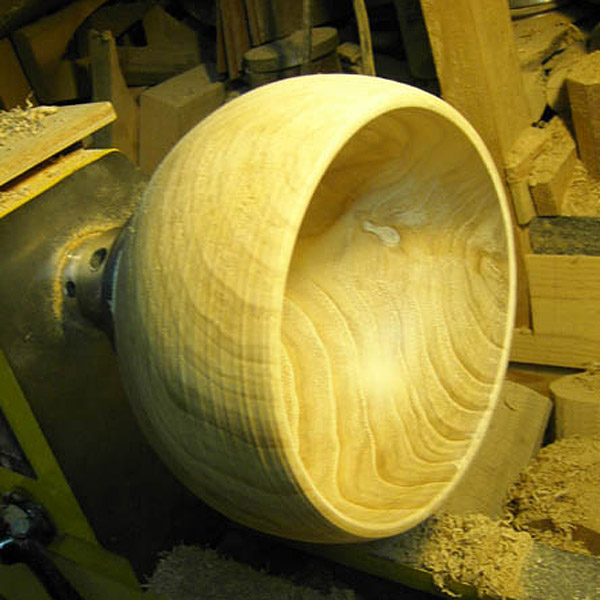
Kyoto Store Prototype: Chestnut Wood Handturned Donburi Hachi (Big Bowl)

Greetings From Kyoto

Kyoto photographer Kosuke Okuda and I teamed up to do an article for the Russian travel magazine Afisha Mir (Афиша-Мир). I just got a PDF of the article — hot off the server!

In the article I introduced the long history of Aritsugu which was founded in 1560. Aritsugu is one of the most famous makers of traditional Japanese knives and they are found in good kitchens all over Japan. We focused on the special eel bone cutting ‘honegiri’ knife that is used for the traditional Kyoto summer delicacy of ‘hamo’ pike eel. The knife is over 40 cm long, weighs more that 500 gm and costs more than $1,000 USD!

I wrote it, but I can’t read it!!

Kyoto photographer Kosuke Okuda and I teamed up to do an article for the Russian travel magazine Afisha Mir (Афиша-Мир). I just got a PDF of the article — hot off the server!

In the article I introduced the long history of Aritsugu which was founded in 1560. Aritsugu is one of the most famous makers of traditional Japanese knives and they are found in good kitchens all over Japan. We focused on the special eel bone cutting ‘honegiri’ knife that is used for the traditional Kyoto summer delicacy of ‘hamo’ pike eel. The knife is over 40 cm long, weighs more that 500 gm and costs more than $1,000 USD!

I wrote it, but I can’t read it!!

Kyoto photographer Kosuke Okuda and I teamed up to do an article for the Russian travel magazine Afisha Mir (Афиша-Мир). I just got a PDF of the article — hot off the server!

In the article I introduced the long history of Aritsugu which was founded in 1560. Aritsugu is one of the most famous makers of traditional Japanese knives and they are found in good kitchens all over Japan. We focused on the special eel bone cutting ‘honegiri’ knife that is used for the traditional Kyoto summer delicacy of ‘hamo’ pike eel. The knife is over 40 cm long, weighs more that 500 gm and costs more than $1,000 USD!

I wrote it, but I can’t read it!!

Kyoto photographer Kosuke Okuda and I teamed up to do an article for the Russian travel magazine Afisha Mir (Афиша-Мир). I just got a PDF of the article — hot off the server!

In the article I introduced the long history of Aritsugu which was founded in 1560. Aritsugu is one of the most famous makers of traditional Japanese knives and they are found in good kitchens all over Japan. We focused on the special eel bone cutting ‘honegiri’ knife that is used for the traditional Kyoto summer delicacy of ‘hamo’ pike eel. The knife is over 40 cm long, weighs more that 500 gm and costs more than $1,000 USD!

I wrote it, but I can’t read it!!

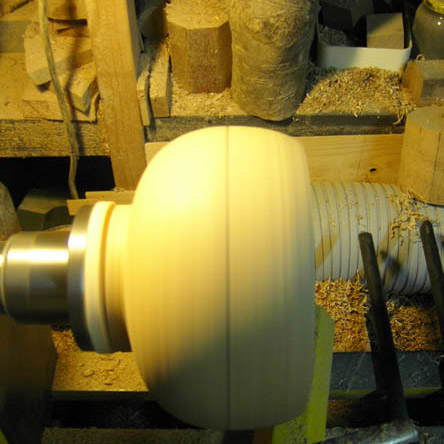
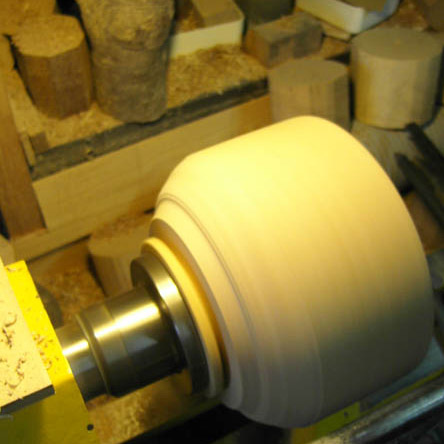
I am doing a little collaboration with a woodcraft artisan based in Miyama, the mountains of rural Kyoto. We are developing some tableware prototypes hand turned with local wood for KyotoStore.

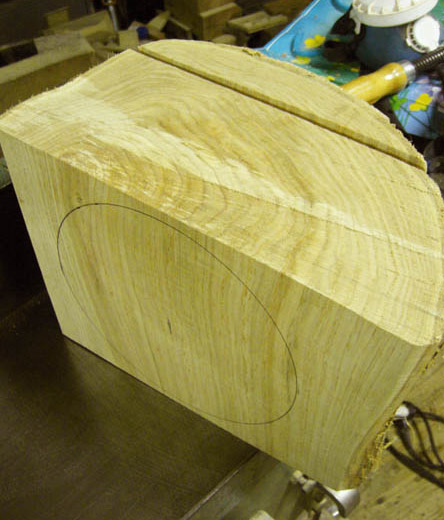
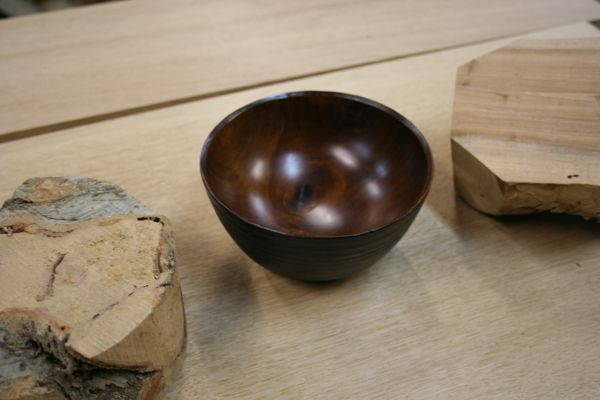
The first one, a chestnut donburi hachi (big bowl), in these photos is still on the lathe. I chose to collaborate with this artisan because he makes his works rather rough and imperfect. My image for this series is wood but to feel like a Raku Ware (Raku-yaki) tea bowl – rough hewn. The artisan is turning these not only rough but with the grain of the wood to ensure that they will contort in form – no perfect symmetry please! I want some wabi-sabi.I haven’t laid hands on the piece yet, but the photo that just came in looks great.

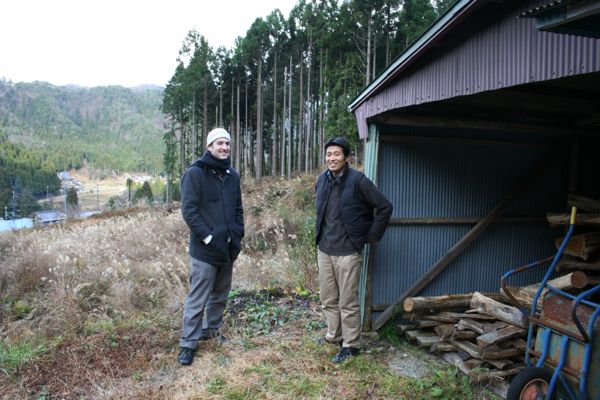
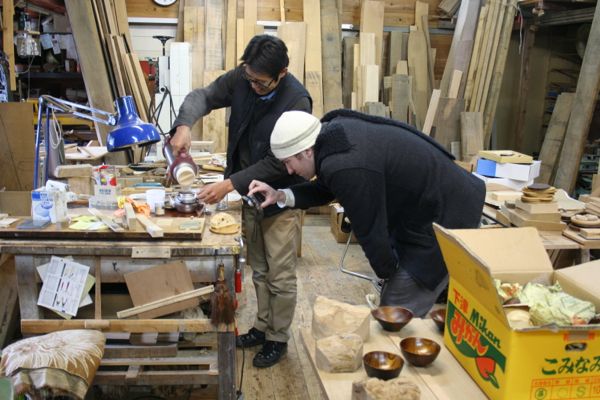
I dug around in iPhoto and found some pictures I snapped when I visited his workshop a few years ago in mid-December — it was cold even in the workshop with the stove on! He served us hot tea and homemade stollen. His mountainside workshop is amazing and has an inspiring view and what a collection of local hardwoods. I visited with chef Brendon Edwards when he was in Kyoto apprenticing at Kichisen.

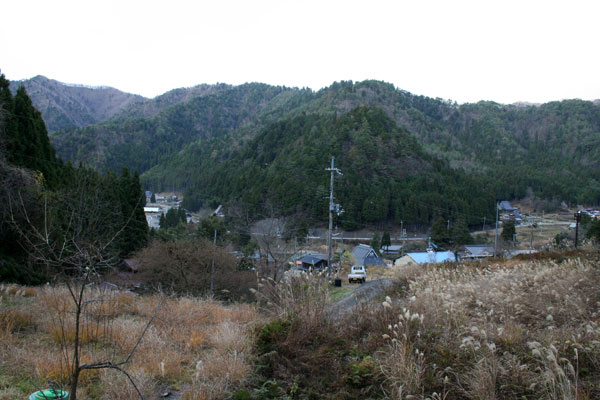
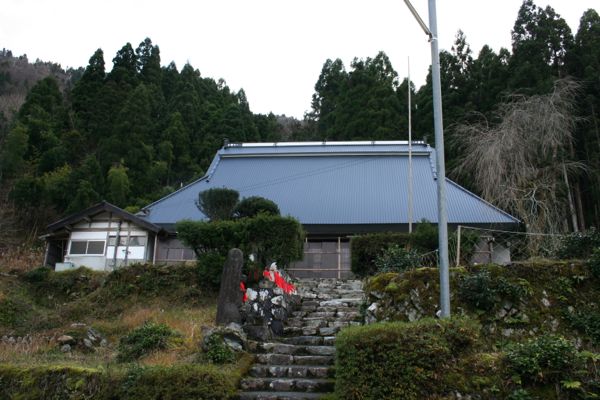
Miyama (美山, lit. beautiful mountain) is a village of thatched roof farm houses in rural Kyoto, about 90 minutes by car from the city. The main village is an historic preservation district. (My professor in grad school oversaw the designation and creation of the district.) I also found a few photos of Miyama which I took in the autumn some years ago.
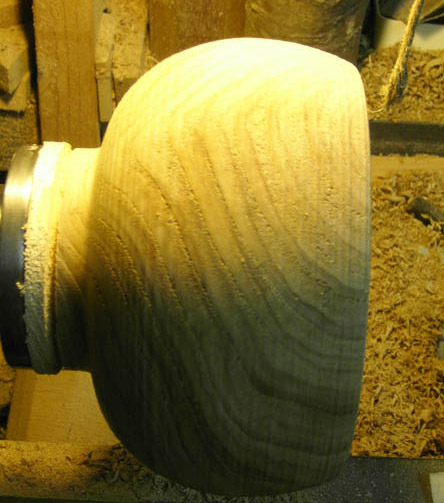
Kyoto Store Prototype: Chestnut Wood Handturned Donburi Hachi (Big Bowl)

Kyoto Store Prototype Chestnut Wood Handturned Donburi Hachi (big-bowl) & Miyama Artisan Workshop
Visting the Workshop with Chef Brendon Edwards (Hot Tea and Stollen)

Kyoto Store Prototype: Chestnut Wood Handturned Donburi Hachi (Big Bowl) Kyoto Store Prototype: Chestnut Wood Handturned Donburi Hachi (Big Bowl) Kyoto Store Prototype: Chestnut Wood Handturned Donburi Hachi (Big Bowl)

Kyoto Store Prototype Chestnut Wood Handturned Donburi Hachi (big-bowl) & Miyama Artisan Workshop
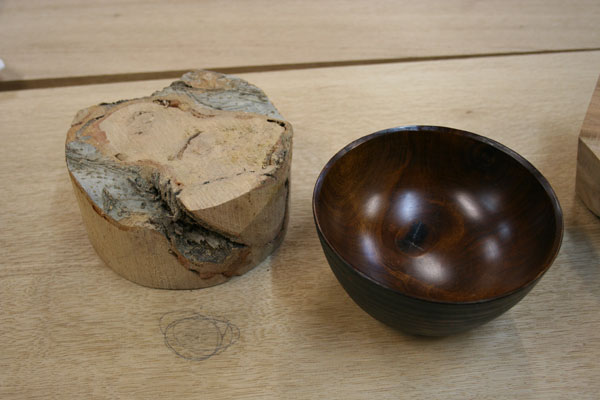
Before and After
Kyoto Store Prototype Chestnut Wood Handturned Donburi Hachi (big-bowl) & Miyama Artisan Workshop
Miyama Mountaintop View
Kyoto Store Prototype Chestnut Wood Handturned Donburi Hachi (big-bowl) & Miyama Artisan Workshop
The village temple
Kyoto Store Prototype Chestnut Wood Handturned Donburi Hachi (big-bowl) & Miyama Artisan Workshop
The Wood Stockpile
Kyoto Store Prototype Chestnut Wood Handturned Donburi Hachi (big-bowl) & Miyama Artisan Workshop
Before and After