Gorgeous Camellia Winter Flower Motif, Elegant Kyoto-style Donabe Hot-pot

Kyoto Ceramics -- New Camellia Motif Donabe Hotpot

Greetings From Kyoto

Kyoto photographer Kosuke Okuda and I teamed up to do an article for the Russian travel magazine Afisha Mir (Афиша-Мир). I just got a PDF of the article — hot off the server!

In the article I introduced the long history of Aritsugu which was founded in 1560. Aritsugu is one of the most famous makers of traditional Japanese knives and they are found in good kitchens all over Japan. We focused on the special eel bone cutting ‘honegiri’ knife that is used for the traditional Kyoto summer delicacy of ‘hamo’ pike eel. The knife is over 40 cm long, weighs more that 500 gm and costs more than $1,000 USD!

I wrote it, but I can’t read it!!

Kyoto photographer Kosuke Okuda and I teamed up to do an article for the Russian travel magazine Afisha Mir (Афиша-Мир). I just got a PDF of the article — hot off the server!

In the article I introduced the long history of Aritsugu which was founded in 1560. Aritsugu is one of the most famous makers of traditional Japanese knives and they are found in good kitchens all over Japan. We focused on the special eel bone cutting ‘honegiri’ knife that is used for the traditional Kyoto summer delicacy of ‘hamo’ pike eel. The knife is over 40 cm long, weighs more that 500 gm and costs more than $1,000 USD!

I wrote it, but I can’t read it!!

Kyoto photographer Kosuke Okuda and I teamed up to do an article for the Russian travel magazine Afisha Mir (Афиша-Мир). I just got a PDF of the article — hot off the server!

In the article I introduced the long history of Aritsugu which was founded in 1560. Aritsugu is one of the most famous makers of traditional Japanese knives and they are found in good kitchens all over Japan. We focused on the special eel bone cutting ‘honegiri’ knife that is used for the traditional Kyoto summer delicacy of ‘hamo’ pike eel. The knife is over 40 cm long, weighs more that 500 gm and costs more than $1,000 USD!

I wrote it, but I can’t read it!!

Kyoto photographer Kosuke Okuda and I teamed up to do an article for the Russian travel magazine Afisha Mir (Афиша-Мир). I just got a PDF of the article — hot off the server!

In the article I introduced the long history of Aritsugu which was founded in 1560. Aritsugu is one of the most famous makers of traditional Japanese knives and they are found in good kitchens all over Japan. We focused on the special eel bone cutting ‘honegiri’ knife that is used for the traditional Kyoto summer delicacy of ‘hamo’ pike eel. The knife is over 40 cm long, weighs more that 500 gm and costs more than $1,000 USD!

I wrote it, but I can’t read it!!

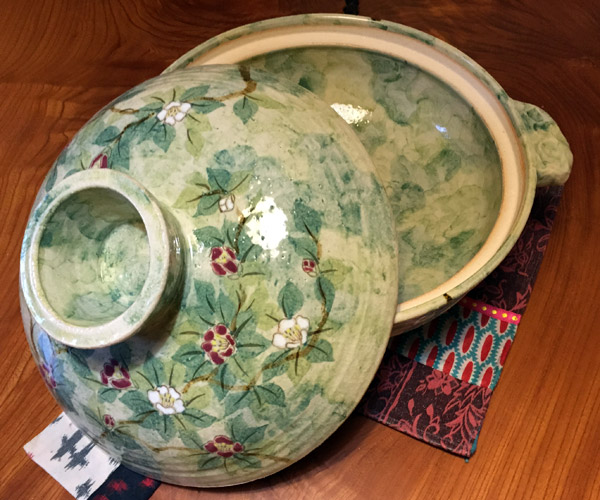
I have two nice gohan nabe (clay hot-pots for cooking rice) but my regular nabe pot broke a few years ago and I hadn’t replaced it yet. I had my eye on this one that caught my attention three years ago. I couldn’t figure out why a nabe pot, which is piping hot winter cuisine would be so green. Then I realized that the motif is camellia, which blooms in winter, in Kyoto. I love this, it’s very ‘Kyoto’, I think. At first motif seems to not be right, then you realize that it is deeper and more correct than you thought possible.

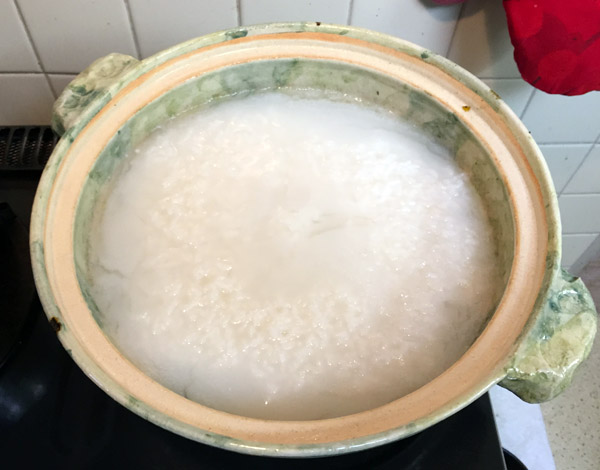
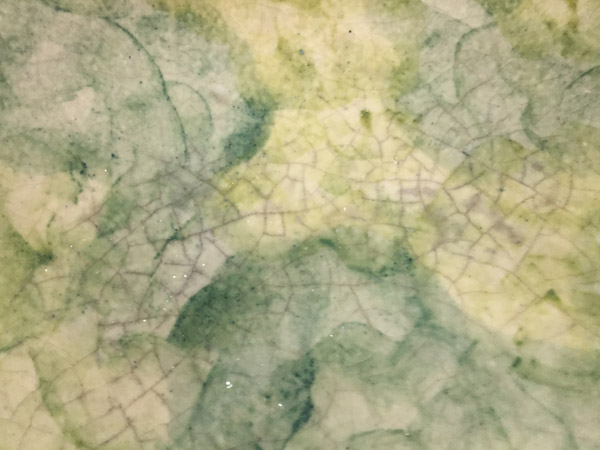
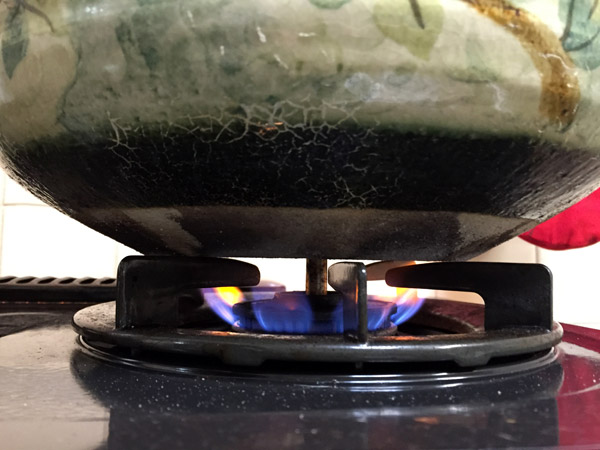
To season a pottery nabe pot, first a thick rice porridge is made. This fills the inevitable cracks that form with first use and prevent water from dripping through the pot, which endangers complete breakage. I was surprised how much the glaze on the outside of this pot cracked. But, I think that just shows the cracks more readily because of the tones and hues of the glaze.

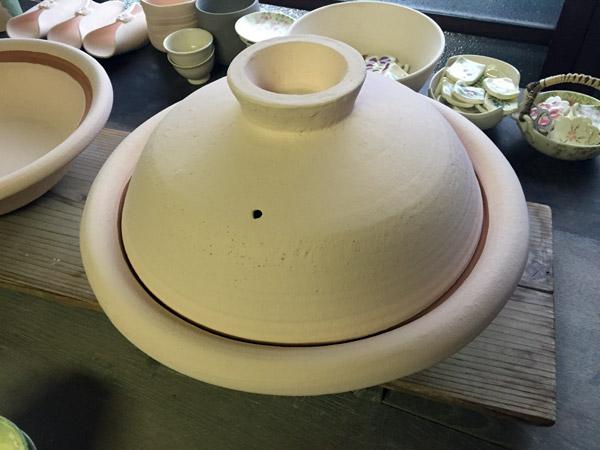
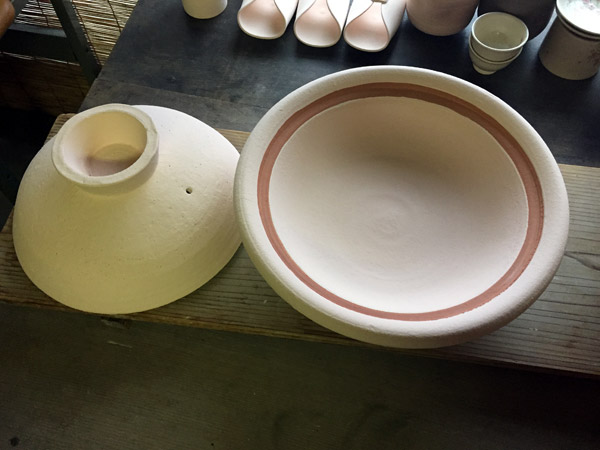
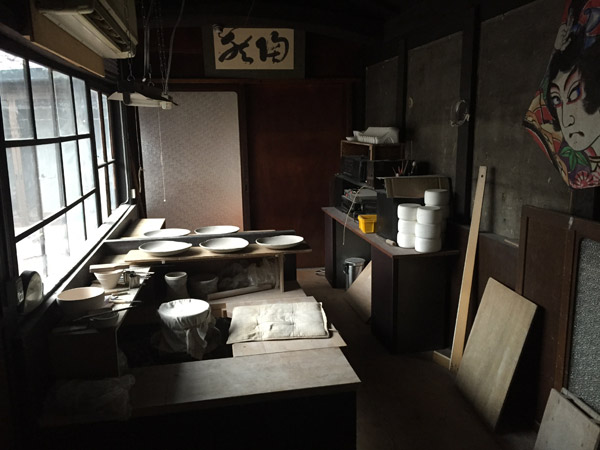
After I finally made my purchase, the artisan potter took me back to the workshop to see their new nabe design for this coming autumn. It is quite nice, very simple. He asked me if I wanted to collaborate on developing a nabe to my own tastes. I was honored and readily agreed! After using my nabe for the first time, I quickly came up with a few design refinements that I would like to make. Since then, I have been thinking about pattern motifs as well. I think I have a few nice ones.

I am really looking forward to production this coming autumn!!

Here is an article I wrote about what I consider to be Kyoto’s very best winter nabe cuisine; botan nabe, or wild boar hot-pot.
 

Kyoto Ceramics -- New Camellia Motif Donabe Hotpot
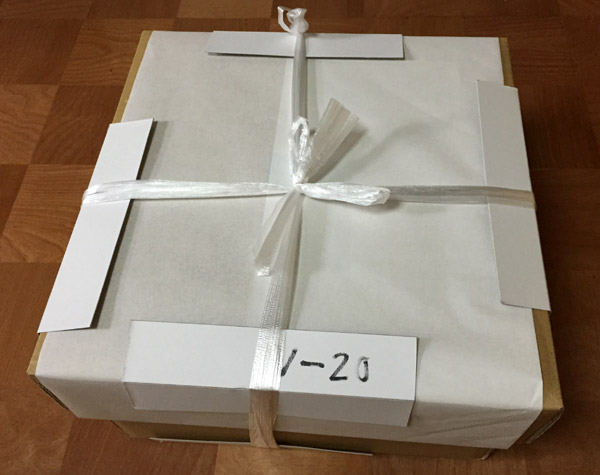
Just arrived home, ready to unwrap.
Kyoto Ceramics -- New Camellia Motif Donabe Hotpot
First Heating, Curing the Nabe Pot — Cooking Rice Porridge
Kyoto Ceramics -- New Camellia Motif Donabe Hotpot
Unwrapped! Gorgeous Camellia Winter Flower Motif Elegant Kyoto-style Donabe

Kyoto Ceramics -- New Camellia Motif Donabe Hotpot

Kyoto Ceramics -- New Camellia Motif Donabe Hotpot
First Heating, Curing the Nabe Pot — Cooking Rice Porridge — Lots of Cracks
Kyoto Ceramics -- New Camellia Motif Donabe Hotpot
Kiln Studio Visit — Next Season’s Design and an Invitation to Collaborate
Kyoto Ceramics -- New Camellia Motif Donabe Hotpot
Kiln Studio Visit — Next Season’s Design and an Invitation to Collaborate
Kyoto Ceramics -- New Camellia Motif Donabe Hotpot
Kiln Studio Visit — The Studio