Juicing Japanese Citrus, Ponkan and Dekopon

Juicing Japanese Citrus Ponkan and Dekopon

Greetings From Kyoto

Kyoto photographer Kosuke Okuda and I teamed up to do an article for the Russian travel magazine Afisha Mir (Афиша-Мир). I just got a PDF of the article — hot off the server!

In the article I introduced the long history of Aritsugu which was founded in 1560. Aritsugu is one of the most famous makers of traditional Japanese knives and they are found in good kitchens all over Japan. We focused on the special eel bone cutting ‘honegiri’ knife that is used for the traditional Kyoto summer delicacy of ‘hamo’ pike eel. The knife is over 40 cm long, weighs more that 500 gm and costs more than $1,000 USD!

I wrote it, but I can’t read it!!

Kyoto photographer Kosuke Okuda and I teamed up to do an article for the Russian travel magazine Afisha Mir (Афиша-Мир). I just got a PDF of the article — hot off the server!

In the article I introduced the long history of Aritsugu which was founded in 1560. Aritsugu is one of the most famous makers of traditional Japanese knives and they are found in good kitchens all over Japan. We focused on the special eel bone cutting ‘honegiri’ knife that is used for the traditional Kyoto summer delicacy of ‘hamo’ pike eel. The knife is over 40 cm long, weighs more that 500 gm and costs more than $1,000 USD!

I wrote it, but I can’t read it!!

Kyoto photographer Kosuke Okuda and I teamed up to do an article for the Russian travel magazine Afisha Mir (Афиша-Мир). I just got a PDF of the article — hot off the server!

In the article I introduced the long history of Aritsugu which was founded in 1560. Aritsugu is one of the most famous makers of traditional Japanese knives and they are found in good kitchens all over Japan. We focused on the special eel bone cutting ‘honegiri’ knife that is used for the traditional Kyoto summer delicacy of ‘hamo’ pike eel. The knife is over 40 cm long, weighs more that 500 gm and costs more than $1,000 USD!

I wrote it, but I can’t read it!!

Kyoto photographer Kosuke Okuda and I teamed up to do an article for the Russian travel magazine Afisha Mir (Афиша-Мир). I just got a PDF of the article — hot off the server!

In the article I introduced the long history of Aritsugu which was founded in 1560. Aritsugu is one of the most famous makers of traditional Japanese knives and they are found in good kitchens all over Japan. We focused on the special eel bone cutting ‘honegiri’ knife that is used for the traditional Kyoto summer delicacy of ‘hamo’ pike eel. The knife is over 40 cm long, weighs more that 500 gm and costs more than $1,000 USD!

I wrote it, but I can’t read it!!

I love Japanese citrus. There is so much variety and most of it is unique to Japan. There is a little shop in my neighborhood that sells B grade fruit and vegetables quite cheap. I buy a lot things there for juicing, canning, preserving and so on. Winter is when the best domestically produced citrus is available. Twice this week I bought a whole lot of citrus and juiced them up. I have a Sharp HealSlo ‘slow juicer’, which makes super creamy juice. The combination of the quality hardware

Round One: Ponkan and Hassuaku
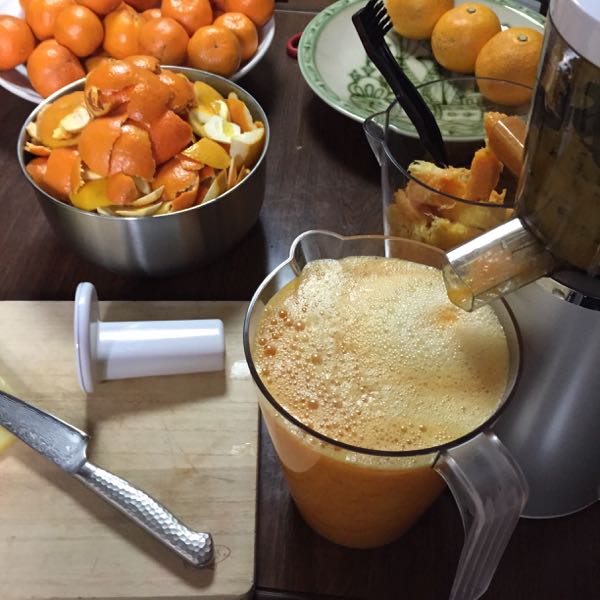
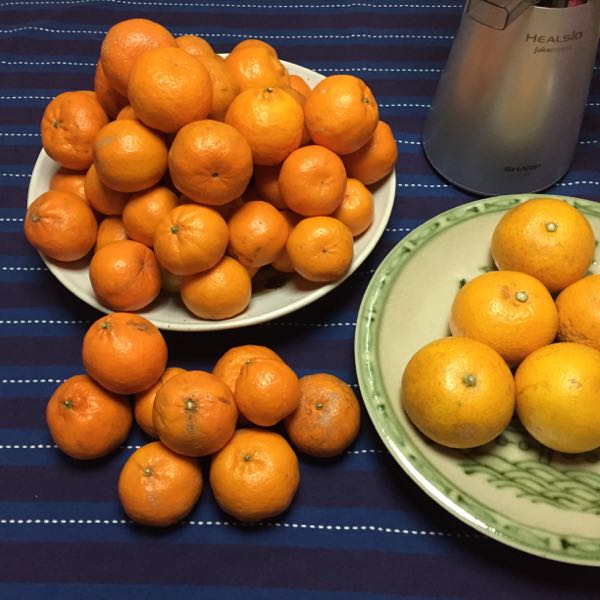
The Fruit: 6 kilos of ponkan, 1 kilo of hassaku. Yield: 3.5 liters of juice. Cost: 800 yen

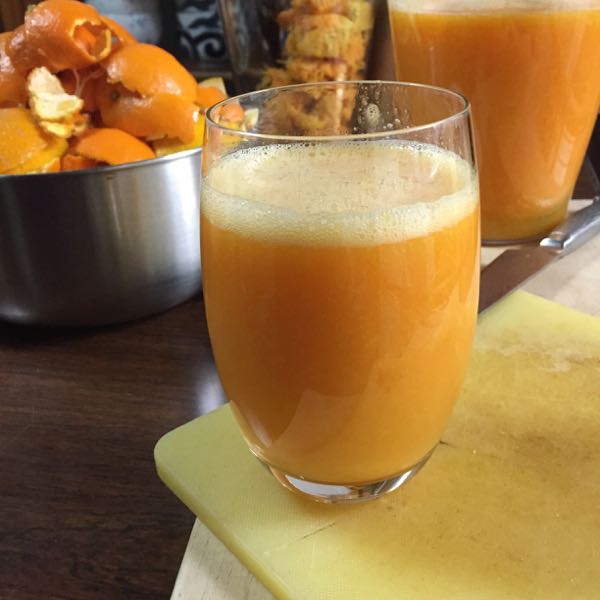
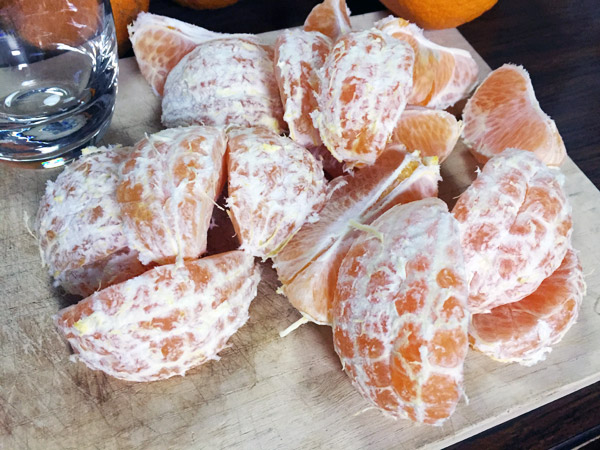
For 800 yen, I got 6 kg of ponkan and 1 kg of hassaku (Japanese citrus) — that is cheap — at the neighborhood discount fruit and veggie shop. This was the first time I think I have made ponkan juice. It took about an hour but this was THE BEST citrus juice I have ever had!! And, I got about 3.5 liters. Smooth and creamy texture with a really solid and complexly sweet, mellow flavor. So yummy!!

More about Ponkan (Chinese Honey Orange) here and Hassaku Orange here.

Round Two: Dekopon:
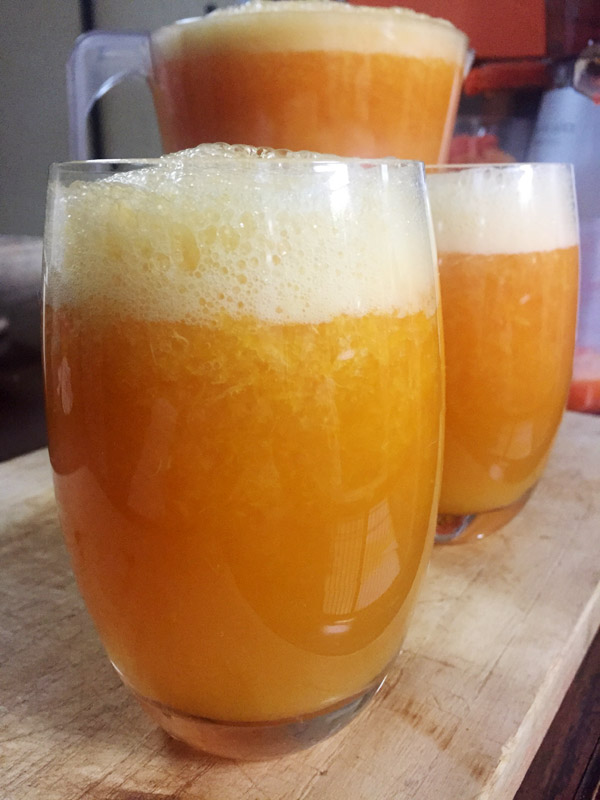
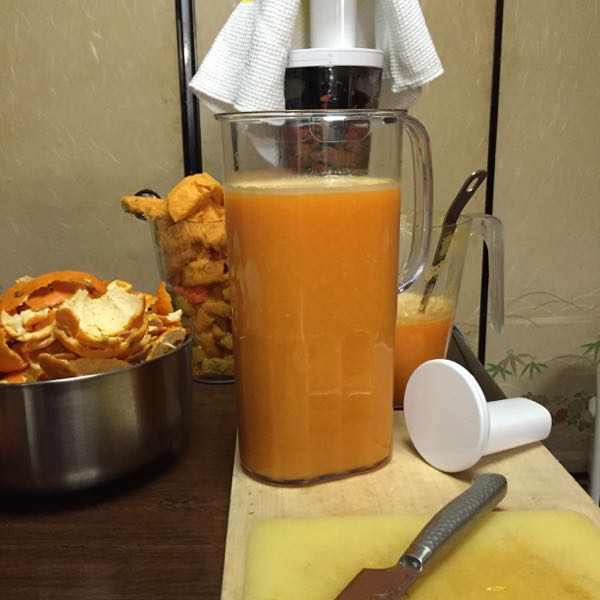
The Fruit: 4 or 5 kilos of dekopon. Yield: 3.5 liters of juice. Cost: 1200 yen

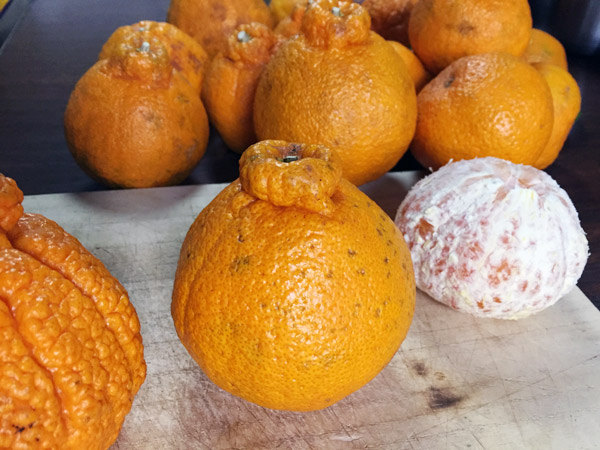
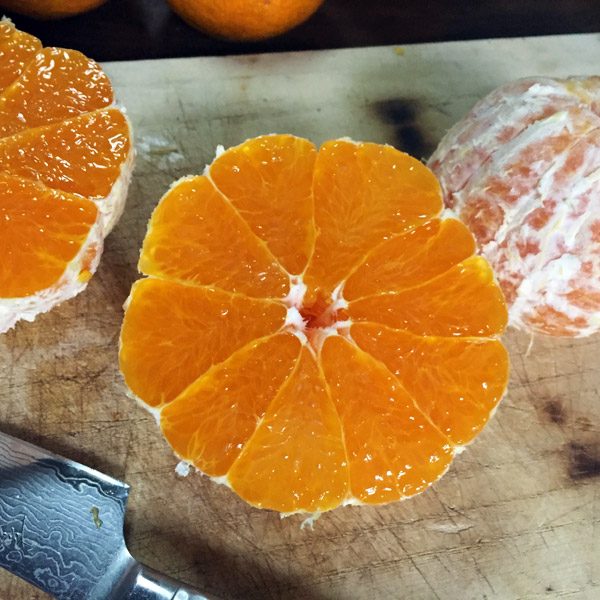
OMG, I could’t believe how juicy these were! They were the best citrus I have had this winter — and I bought them at the horrible little discount shop owned by a man I nicknamed, Scowl. The juice was beyond delicious, even better than the ponkan juice I made a few days ago. And, they were big and super easy to peel. The ponkan were tiny and nearly impossible to peel. These weren’t pretty specimens on the outside, but damn, the flesh was beautiful and they were so tasty!! I think I will buy some more!

More about Dekopon here.
Juicing Japanese Citrus Ponkan and Dekopon
Juicing Ponkan and Hassaku
Juicing Japanese Citrus Ponkan and Dekopon
Juicing Ponkan and Hassaku
Juicing Japanese Citrus Ponkan and Dekopon
Juicing Ponkan and Hassaku
Juicing Japanese Citrus Ponkan and Dekopon
Ponkan (left) and Hassaku (right)
Juicing Japanese Citrus Ponkan and Dekopon
Juicing Dekopon
Juicing Japanese Citrus Ponkan and Dekopon
Juicing Dekopon
Juicing Japanese Citrus Ponkan and Dekopon
Juicing Dekopon — Almost no pith, almost all juicy.
Juicing Japanese Citrus Ponkan and Dekopon
Juicing Dekopon — All done, about 3.5 liters of juice!