


This shrine holds a memorial service for worn out knives every year. The shrine accepts old knives and other cutting instruments that have served their human owners. Japanese give thanks to their knives even, now how is that for gratitude and humility? This is another sub-shrine at Yasaka Shrine, less than a 1 minute walk from the ‘Beauty Shrine‘.
Kyoto was the center of production for hamono (cutting instruments, including knives) for over 1,000 years. All the traditional arts, crafts and industries required some kind of cutting instrument, therefore the production of hamono was an essential industry in Kyoto and very advanced.
SHARE! Kyoto Support Topic: Kyoto Top 10 Sightseeing List
Japan was a sword culture but Kyoto was the cultural and spiritual capital of Japan, and the military powers were often based in the provinces. Therefore, Kyoto hamono was not restricted to swords. (More about Kyoto hamono here.)
Japanese people are often very gracious to their surroundings, usually to people, but also to the tools that make their lives more comfortable and efficient. There are shrines in Japan dedicated to such things as combs and dolls and needles.

This shrine, the Hamono Jinja is also visited by people praying for some happiness, benefit or profit in the future because knives in Japanese culture are considered to ‘cut and open up the future’. Cutting is serious business in Japan. A chef in training will have to study for several years before they are allowed to handle a knife or cut anything in the kitchen. In the Japanese kitchen, it could be said that cutting is more serious than cooking.
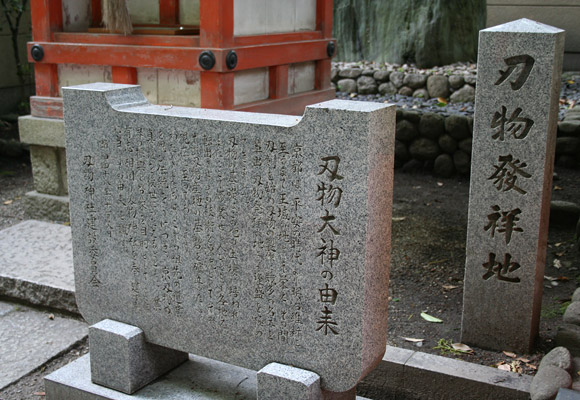
The inscription on the stone reads as follows:
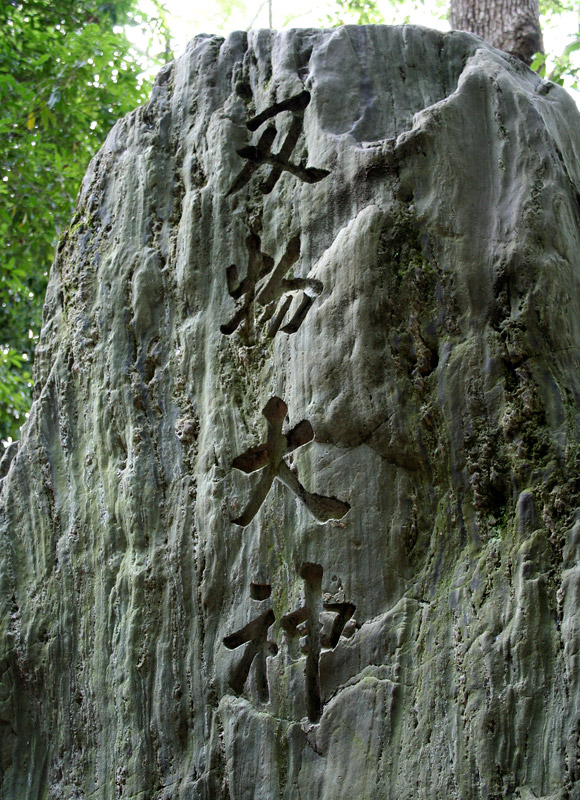
Origin of Great Hamono God
Kyoto has been prosperious due to having the capital and several castles from the Heian period to the Meiji period. During this time (1,100 years), Kyoto has produced many cutlery craftsmen with great skill and produced cutlery, such as swords. Therefore, the origin (Kyoto) of (Japanese) cutlery culture and has been prosperous.
The fundamentals of (Japanese) cutlery making were developed in Kyoto and those craftsmen who trained in Kyoto then went all over Japan and spread the cutlery culture. Even now, cutlery producing regions in other parts of Japan have the original skill from Kyoto.
We have made this shrine with the same will, that is to inherit the great skill of our ancestors and with great respect and have the role of teaching the skill to next generation and hope for continuous prosperity of cutlery culture in Kyoto.
November 8, 1973
Hamono Shrine Construction Committee
(translated by Miwa)
Find out what’s going on in Kyoto right now, follow me on Twitter.




I love my Henckels. I find the handle weighting and range of blade options is just perfect for the way I cook. I am hard on knives, I don’t take care of them as well as I should, but mine have held up for 20 years and will probably last a lifetime.