


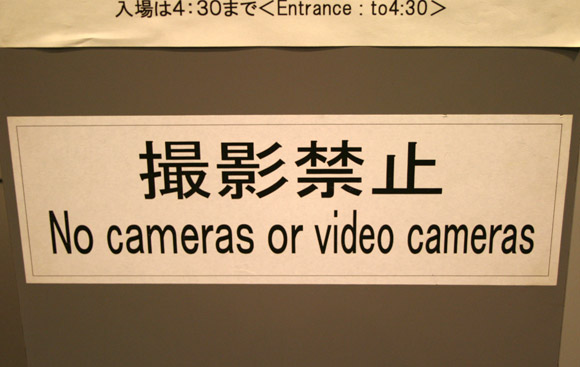
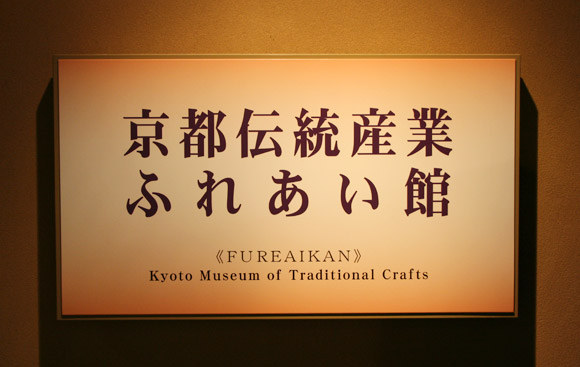
Today I went to the Kyoto Museum of Traditional Crafts at Miyakomesse. I was about to say that this is the best museum in Kyoto, but sadly I have the following frustrating and needless experience to report:
First of all the meaning of fureaikan (ふれあい館) is a museum (kan) where people can meet (ai) and touch (fure) the products of traditional Kyoto industry.
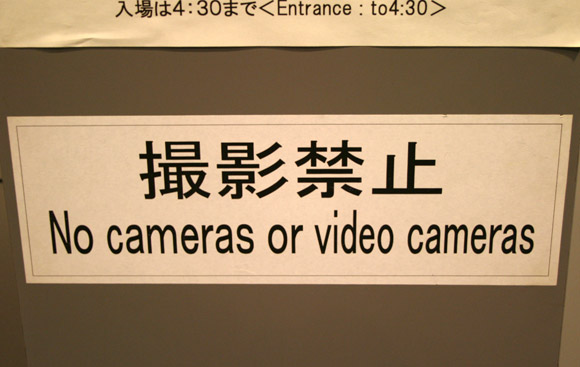
I thought that for our readers abroad, people that are planning a trip to Kyoto or people thinking about visiting the city in the future, would like to see a few photos of the Kyoto Museum of Traditional Crafts. Before I had taken even a few photos this lady comes running up to me waiving and crossing her arms in what I imagine she thought was the international signal to cease. I asked why. Lame excuses ensued and soon other staff began to appear.
I asked specifically why no photos are allowed and who made the policy. They tried to tell me that for example this desk on display made by a traditional craftsman is protected by copyright. A desk? So bamboo fences, stone lanterns, paper umbrellas and even wooden cedar columns are protected by copyright?
Now let’s see if I’ve got this straight. So if I take a photo and I am a ‘real’ journalist, I publish it in a book, a magazine, etc and make money from it, it isn’t copyright infringement? On the other hand if I take the same photo as an individual exploring Kyoto and it’s fascinating traditions, maybe post it on Flickr or Facebook, that is copyright infringement?
I believe that the Kyoto Museum of Traditional Crafts has no idea why they have this policy or what it is intended to accomplish and that the Kyoto Museum of Traditional Crafts is broken. Kyoto Museum of Traditional Crafts is closed and anti-social in an open, social world.
The crafts on display are not antique, they are new, so there is no danger of the beautiful work being damaged by camera flashes. (Here is the image that comes to my mind of photos in Western museums; Japanese tourists lining up to have their picture taken in front of none other than the Mona Lisa at the Louvre in Paris. But no photos at the Kyoto Museum of Traditional Crafts!)
One thing to know about Kyoto is that traditional industry in Kyoto has been struggling for decades. These businesses see their revenue contract year after year after year. Young people don’t want to work in traditional companies. Children of family business don’t take over the business. And of course countless companies every year just fail and go bankrupt.
But, I hope that no one reading this will ever feel sorry for these people or feel sorry for the loss of a Japanese tradition. If they don’t want to be a part of the modern world, then who cares? They will fail and should fail. People that care, people that behave like people and not automatons, people that are open and social will inevitably replace these fossils. And, it is happening in Kyoto right now!
SHARE! Kyoto Support Forum: Museums and Galleries in Kyoto
Tweet! Tweet! Find out what’s going on in Kyoto right now, follow me on Twitter.
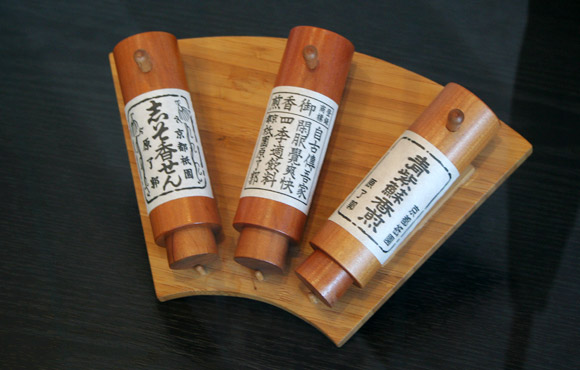



I went to something similar near Nijo castle, they were showing their shibori crafts, I was bummed that I couldn’t take a photo of it to post on my blog, I wasn’t using a flash nor trying to make money off of it, but trying to spread a little culture.
You can’t take photos at a museum, so you conclude that Japanese traditional crafts deserves to be lost? Wow, overreact much?
I was hoping to find some useful information on this place, but all that’s here is some noise about their photo policy. Thanks.
Hello sensible,
We should not carry water for stupid people. If they insist on building walls around themselves, then they have to accept the consequences. The consequence is being dissociated from the rest of the world and that will cause you to go out of business.
This is completely in line with the Japanese concept of responsibility (sekinin 責任). Accepting the consequences of your own actions is mature and adult.
My statement doesn’t have anything to do with the photo policy, that is just a symptom of a much larger problem in Kyoto.