Kyoto Teppanyaki Recommendation: Sou
OK, I have found a teppanyaki restaurant that I can highly recommend. It is located in Gion but not crazy expensive or stuck-up like lots or restaurants there.
Sou, properly called Teppan Kappo Sou serves the highest quality beef available in Japan, grade A5. They have an English menu. Please see the link below for my full review at and lots of photos at KyotoFoodie.
Hello jborsecnik,
There are quite a few restaurant supply stores at the Kyoto Wholesale Food Market near Tambaguchi Station.
See map at the link below. (The photos at the link below are mostly of fish and vegetables, there are other other stores that sell the items you mention above too.) I hope this answers your question.
https://openkyoto.com/sightseeing/kyoto-wholesale-food-market.html
By the way, the wholesale market is not that much cheaper than a lot of retail stores. Be sure to bargain with the vendors at the wholesale market and get prices from all the relevant before you make a purchase.
Also, if you can read Japanese or have a Japanese friend that can help you search you can often find good deals online.
There is also Gyomu Su-pa- (業務スーパー), a super market chefs and restaurants. I haven’t been to one yet but I know people who shop there. They aren’t very sexy but there are several in south Kyoto.
Hello jazz,
This is a rather difficult order in Kyoto for kaiseki. I talked to several kaiseki restaurants and they were not interested.
Chef Tanigawa at Kichisen said that for children up to about 12 years of age, accompanied by two adults, he would offer a children’s menu. It would be 5,000 yen per child and be mainly meat based. A three course meal with donburi (rice bowl), Japanese style hamburger (hamba-gu) and another dish. The meal will be ‘omakase’ (left to the discretion of the chef).
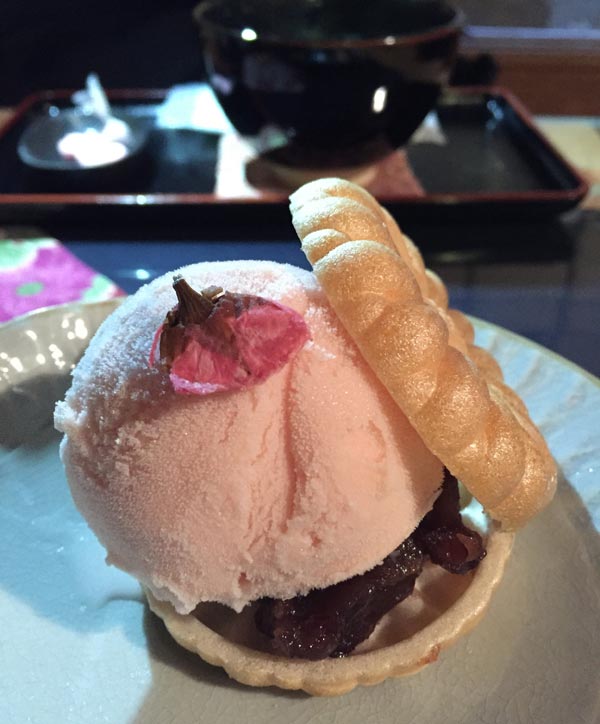
About sakura extract and sakura flavoring. I am not sure where to buy those items. We are in the process of opening an online store and will try to offer such products. Please check back!
Hello nowpot,
One thing, mochi, manju and wagashi something that Japanese do not usually make at home. It is just too labor intensive.
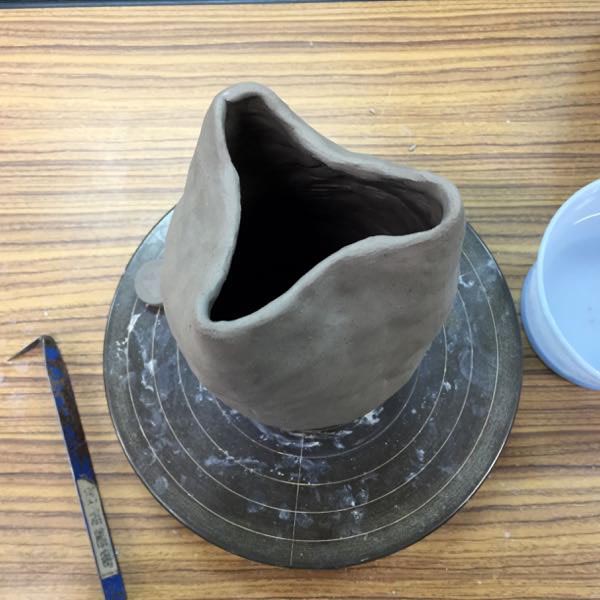
There are several wagashi making classes (和菓子教室) available in Kyoto. Here are two that I have experience with. Wagashi making class may still be a rarified experience for foreign visitors to Japan so English may be difficult to obtain. However, you could take a Japanese speaking guide to translate or you can just follow along by watching the teacher’s demonstration. It is not so complicated.
Kanshudo Higashi (East) 甘春堂 東店
Kanshudo is a shinise wagashi store with three locations, two are near Shichi-jo Street and one is in Sagano (Western Hills). The Kanshudo East store’s wagashi making class I have participated in twice. (Sagano store also offers wagashi class) It takes about 30 minutes and you get to make 3 or 4 tea ceremony wagashi and take them home. The total cost was 1,500 yen with hojicha tea and 2,000 yen with maccha tea.
Again, this is tea ceremony wagashi, the highest quality wagashi in Japan. All the ingredients are pre-made and the students do the physical construction and shaping of the wagashi.
English: A useful English explanatory pamphlet is available. The verbal explanation by the teacher of the wagashi making is only in Japanese. It is more about looking than listening, so limited English is not much of a problem.
website: http://www.kanshundo.co.jp (no English)
wagashi class website: http://www.kanshundo.co.jp/museum/make/annai.htm (no English)
tel:075-561-1318
address: Kyoto-shi, Higashiyama-ku, Kawabata Shomen Higashi-iru, Chaya-machi 511-1 (京都市東山区川端正面東入る茶屋町511-1)
nearby sightseeing destinations: Kiyomuzi Temple 清水寺, Sanjusangen-do Temple 三十三間堂, Toyokuni Jinja Shrine 豊国神社, Kyoto National Museum and Mimizaka (nose tomb) 耳塚.
Yatsuhashian 八つ橋庵
Yatsuhashi is a Kyoto’ most famous confection — and Kyoto people do not eat them. They are souvenirs for tourists, usually Japanese junior and high school students visiting Kyoto for their school excursions. Yatsuhashi actually have a very long history and some of them are quite tasty. As the market is huge, there are many yatsuhashi companies and they are engaged in fierce competition developing new and unique yatsuhashi products. The recent trend is yatsuhashi cafes with parfaits, crepes and soft creams. My favorite yatsuhashi maker is Nishio Yatsuhashi.
Yatsuhashian offers a yatsuhashi making course that I have observed once. The staff is not particularly friendly but the lesson is reasonably interesting. In this class, you get to mix the mochi flour with water and cook it. However, this course too is mostly about assembling the yatsuhashi. The cost is 840 yen for 40 minutes.
The location is quite inconvenient I thought. It is way out in the western suburbs, near Arashiyama and we had to take a taxi to get there. It is kind of a tourist trap type place, selling all kinds of cheap Kyoto souvenirs. The second floor is a traditional Kyoto embroidery museum and is quite interesting. Katsura Villa, probably the most beautiful thing in all of Kyoto is about 10 minutes by taxi.
English: none.
website: http://www.yatuhasian.jp (no English)
yatsuhashi class website: http://www.kyatuhasian.jp/s_index.html (no English)
tel:075-313-2151 FreeDial: 0120-77-8284 (toll free in Japan)
address: Kyoto-shi, Ukyo-ku, Nishikyogyoku, Nishikoromode-cho 36(京都市右京区西京極西衣手町36)
nearby sightseeing destinations: Katsura Imperial Villa 桂離宮 and Koke-dera (Moss Temple) 西芳寺
Hello archer_root,
Fresh Durian: Fresh durian is available, I have purchased it even at supermarkets. I have seen it whole at Meidi-ya (way over priced). Try the department stores too. Takashimaya has the Hosokawa Fruit Store which has lots of high-end fruit (at high-end prices). It seems to me that I have only seen fresh durian in the summer here. Try the Travelt food court at Fujii Daimaru (near Shijo-Teramachi).
Figs: Figs are grown in Japan and are easily found in all grocery stores throughout the summer and autumn.
Obanzai: Kyoto’s favorite food!
Fresh Young Coconut: I have never purchased this but I am sure I have seen it at Meidi-ya, Travelt and so on.
Mango: Japan produces probably the most expensive mango in the world (I think from Miyazaki prefecture) and there are all the imported varieties available too. Recently, Japan is rather mango crazed! There is mango ’boutique’ chain that only sells mango. Mango are usually available at any supermarket.
If you are in Osaka or Kobe the Thai speciality grocery stores would be a good place to try too.
The wholesale markets have excellent selections of fruit as well and usually — at least in Kyoto — you don’t have to buy a truckload.
The Japanese Celiac / Coeliac Gluten Free Restaurant Cards mentioned above are surely very useful but the text is so pixelated that I could barely read the Japanese, so I remade it as best I could. I input the English and Japanese text and made a PDF that people can download and print out for your travels to Japan.
Printer Friendly Celiac Disease English-Japanese Card PDF
Celiac Disease English-Japanese Card PDF
Celiac Disease English-Japanese Card PDF (text outlined version)
If your computer has trouble rendering the Japanese text in the PDF, the outlined version ought to work for you.
I don’t have Celiac Disease and don’t know anything about it. I hope this is helpful for people. Please let me know if there is anything that needs changing, fixing or editing.
Here is a link to Tips for getting gluten free food in Japan, thanks to @DeepKyoto for the tip!
You can just print out this handy-dandy Japanese language card and show it in a restaurant:
Japanese Celiac / Coeliac Gluten Free Restaurant Cards
Japanese Celiac / Coeliac Gluten Free Restaurant text (high resolution version)
I have been with veg/vegan friends that have asked a restaurant to serve a dish without meat and the restaurant refused to serve the person. We begged and even offered to pay the ‘with meat’ price and they said that they could not do it! So, just because you have the card, I don’t think that all your trouble are over in Japan.
Sorry, it seems that it is not available in Kyoto. Kamebishi sells to some wholesaler distributors but once they don’t know where they resell their products. Their webstore is Japanese only and they don’t ship abroad.
One thing, why would you want to combine salt and shoyu anyway?
Hi Mora, You are quite the foodie! Soy Salt? I just called Kamebishi to see if this product is available in Kyoto. They were closed already but I will give them another ring tomorrow.
SouSou has a furoshiki shop now? I have to check that one out!
Ahhh…Sorry, I thought that I replied to this a few days ago, but somehow my post is not here. Strange.
A few years ago I got a killer carving pumpkin at a flower shop on Karasuma Street a bit south of Imadegawa. I paid quite a bit for it, but it made quite a Jack O’ Lantern!
I have seen carving pumpkins around this year at quite a few flower shops, even the Kyoto Coop had some the other day.
I hope you part is a big success!
That is a dog-gone good sounding recipe!! With kuzu and mountain spring water? You must be a real Zen Master chef!
Hello drdave,
Today I stopped in at Meidi-ya today and checked in the flour section on the second floor. They had corn flour and corn grits. I am afraid that I don’t know the difference between those varieties and cornmeal. The grits looked similar in appearance and texture to my recollection of cornmeal but I haven’t laid eyes on any in quite a long time.
Will corn grits or flour make muffins the way you want them?
Lorem ipsum dolor sit amet, consectetur adipiscing elit. Ut elit tellus, luctus nec ullamcorper mattis, pulvinar dapibus leo.